

Solid-state relays (SSRs) have gained significant popularity in various industries due to their numerous advantages, such as fast switching speed, long service life, and high reliability. As a relay supplier, I have witnessed the widespread adoption of SSRs in different applications. However, like any technology, solid-state relays also come with their own set of disadvantages. In this blog post, I will discuss some of the key drawbacks of solid-state relays that potential users should be aware of.
1. High Cost
One of the most significant disadvantages of solid-state relays is their relatively high cost compared to traditional electromechanical relays (EMRs). The manufacturing process of SSRs involves the use of semiconductor materials and complex electronic circuits, which contribute to their higher production costs. For applications where cost is a major concern, the price difference between SSRs and EMRs can be a deciding factor. For example, in large-scale industrial automation systems where hundreds or even thousands of relays are required, the cost of using solid-state relays can quickly add up.
This cost factor can limit the adoption of SSRs in price-sensitive markets. While the long-term benefits of SSRs, such as reduced maintenance and longer lifespan, may offset the initial investment in some cases, it remains a barrier for many budget-conscious customers. As a relay supplier, I often encounter customers who are hesitant to switch to solid-state relays due to the upfront cost. However, I also emphasize the long-term value that SSRs can provide, especially in applications where reliability and performance are critical.
2. Heat Dissipation Issues
Solid-state relays generate heat during operation, which is a byproduct of the electrical resistance in the semiconductor components. Unlike electromechanical relays, which have moving parts and can dissipate heat more effectively through mechanical means, SSRs rely on heat sinks and proper ventilation to manage the heat. If the heat is not dissipated properly, it can lead to a significant increase in the temperature of the relay, which can in turn reduce its performance and lifespan.
Excessive heat can cause the semiconductor materials in the SSR to degrade over time, leading to a decrease in the relay's switching speed and an increase in the on-state resistance. This can result in higher power consumption and potential malfunctions. In high-power applications, the heat dissipation requirements for SSRs can be quite demanding, and additional cooling equipment may be necessary. This not only adds to the overall cost of the system but also increases its complexity. For instance, in a high-power industrial heating system, the SSRs used to control the heating elements may require large heat sinks and fans to maintain a safe operating temperature.
3. Limited Current and Voltage Ratings
Although solid-state relays are available in a wide range of current and voltage ratings, they generally have lower maximum ratings compared to electromechanical relays. This limitation can be a problem in applications that require high current or high voltage switching. For example, in some heavy-duty industrial machinery or power distribution systems, the current and voltage requirements may exceed the capabilities of most solid-state relays.
In such cases, multiple SSRs may need to be connected in parallel or series to handle the required current or voltage. However, this approach can introduce additional complexity and potential reliability issues. Connecting SSRs in parallel can lead to uneven current sharing, which can cause some relays to overheat and fail prematurely. On the other hand, connecting SSRs in series can increase the overall on-state resistance and voltage drop, which can affect the performance of the system. As a relay supplier, I often have to work closely with customers to find the most suitable relay solution based on their specific current and voltage requirements.
4. Susceptibility to Electrical Noise
Solid-state relays are more susceptible to electrical noise compared to electromechanical relays. The semiconductor components in SSRs are sensitive to high-frequency electrical interference, which can cause false triggering or malfunction. Electrical noise can be generated by various sources, such as nearby electrical equipment, power lines, and electromagnetic fields.
In industrial environments, where there is a high level of electrical noise, the reliability of solid-state relays can be compromised. For example, in a factory with a lot of large motors and generators, the electrical noise generated by these devices can interfere with the operation of SSRs. To mitigate this issue, additional shielding and filtering components may be required, which can add to the cost and complexity of the system. As a relay supplier, I often recommend using proper grounding and shielding techniques to minimize the impact of electrical noise on solid-state relays.
5. Lack of Galvanic Isolation in Some Cases
Galvanic isolation refers to the physical separation between the input and output circuits of a relay, which provides electrical isolation and protection against electrical interference and short circuits. While many solid-state relays offer galvanic isolation, some low-cost or specialized SSRs may not have this feature. In applications where galvanic isolation is critical, such as in medical equipment or high-voltage power systems, the lack of this feature can be a significant drawback.
Without galvanic isolation, there is a risk of electrical current flowing between the input and output circuits, which can pose a safety hazard and cause damage to the connected equipment. For example, in a medical device, the lack of galvanic isolation in a relay could potentially expose patients to electrical shock. As a relay supplier, I always make sure to clearly communicate the galvanic isolation capabilities of different solid-state relays to my customers, especially in applications where safety is a top priority.
6. Difficulty in Handling Inductive Loads
Inductive loads, such as motors, solenoids, and transformers, present a challenge for solid-state relays. When an inductive load is switched off, it generates a back EMF (electromotive force) that can cause a high-voltage spike. This spike can exceed the voltage rating of the solid-state relay and damage the semiconductor components.
To protect the SSR from the back EMF, additional snubber circuits or voltage clamping devices are often required. These circuits help to suppress the voltage spike and protect the relay. However, the addition of these components adds to the complexity and cost of the system. Moreover, the snubber circuits can also introduce some delay in the switching operation, which may not be desirable in applications that require fast and precise switching. For example, in a motor control application, the delay introduced by the snubber circuit can affect the motor's performance and response time.
7. Compatibility Issues with Some Load Types
Solid-state relays may not be compatible with all types of loads. For example, some types of fluorescent lamps and certain types of electronic equipment may have specific electrical characteristics that can cause problems when used with SSRs. These loads may require a special type of relay or additional circuitry to ensure proper operation.

In some cases, the high-frequency switching characteristics of solid-state relays can cause interference with the operation of the load. For example, in a lighting system using fluorescent lamps, the high-frequency switching of the SSR can cause flickering or other visual disturbances. As a relay supplier, I work closely with my customers to understand their load requirements and recommend the most suitable relay type. For instance, if a customer is using a special type of load, I may suggest testing different relay models to find the one that works best with their equipment.
Conclusion
Despite the disadvantages mentioned above, solid-state relays still offer many advantages in terms of speed, reliability, and longevity. They are well-suited for a wide range of applications, especially those that require fast switching, low noise, and high reliability. As a relay supplier, I understand the importance of providing our customers with a comprehensive understanding of both the benefits and drawbacks of solid-state relays.
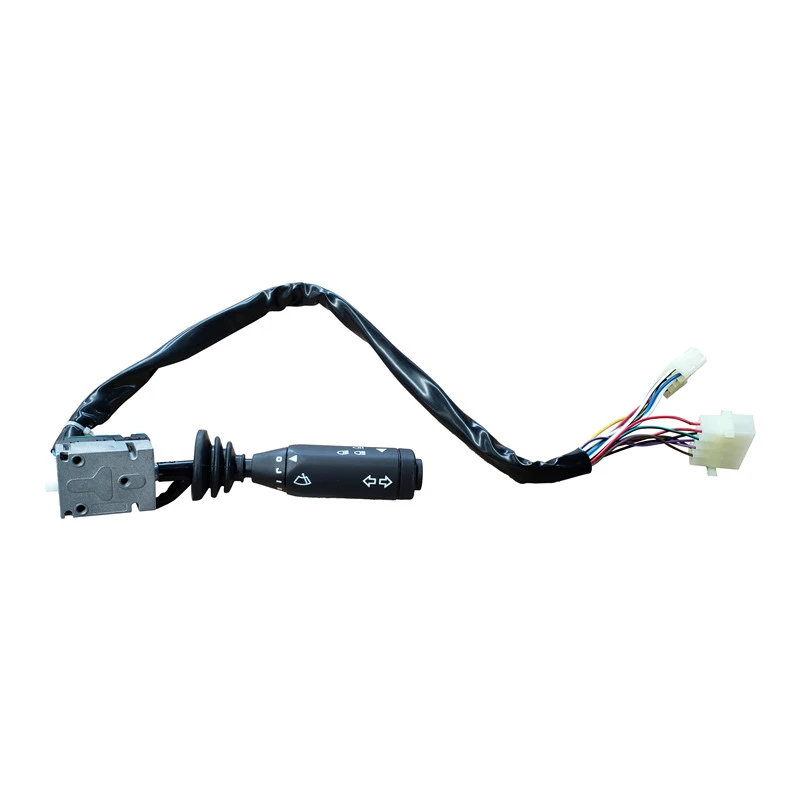
If you are considering using solid-state relays in your application, I encourage you to carefully evaluate your requirements and consider the factors discussed in this blog post. We offer a wide range of relay products, including the WG9130583017 HOWO Steering Switch White Connector, the 3711030-240 FAW Relay, and the 81.25902.0460 5-pin Window Regulator Relay. Our team of experts is always available to provide you with technical support and help you select the most appropriate relay for your needs. If you have any questions or would like to discuss your specific requirements, please feel free to contact us for a procurement discussion.
References
- “Solid State Relays: Principles and Applications” by Richard A. DeDoncker.
- “Relay Handbook” published by Eaton Corporation.
- Technical documentation from various relay manufacturers.